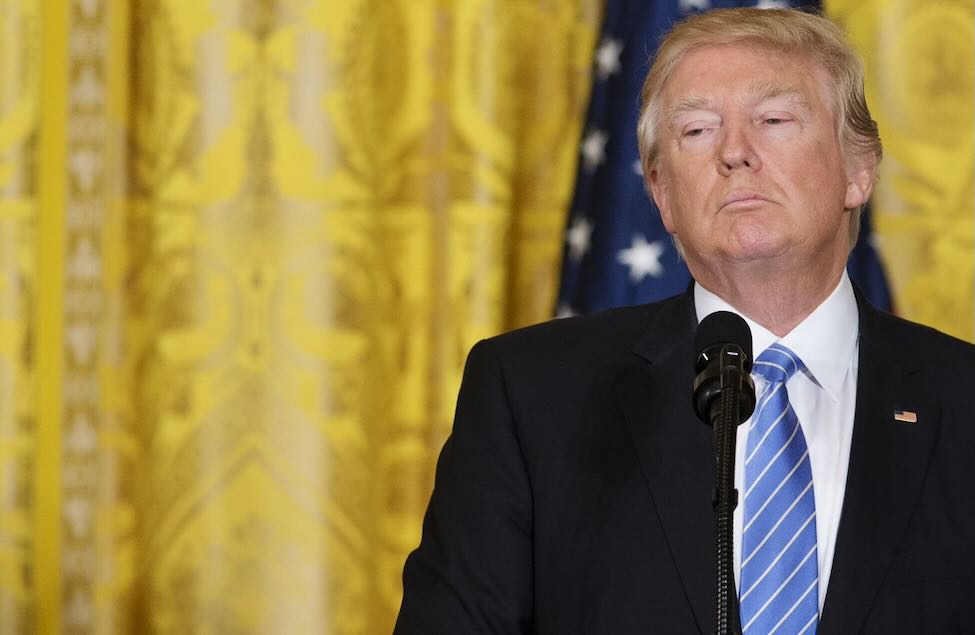
This is a guest post written by Vince Greenwood, PhD. He has just published a new book, Puppet on a String: Trump is Ruled by an Ominous Psychological Condition.
Breaking news. Donald Trump is a psychopath based on the scientific application of the Hare Scale, a rigorous, thorough, and empirically supported assessment scale.
Classifying Trump as a psychopath is not just the opinion of social media influencers or even the thoughtful assessment of mental health professionals. Clinical psychopathy is a distinct condition. There is a ‘gold standard’ assessment procedure for measuring it. In order to back up the assertion that Trump demonstrably earns, namely, that his psychology puts him in the category of clinical psychopathy, this post explains how we can make this assessment, even in the absence of securing Trump’s consent or having a face-to-face interview. I will also make clear what being in the throes of this condition means – for him and for all of us.
The implications of linking Trump to this disorder are as significant as they are ominous. Identifying Trump as a clinical psychopath provides us with a roadmap to help us understand the incoherent and erratic changes of his behavior and the set of personality traits that guarantee havoc for all of us in his orbit. He is like a puppet on the strings of certain immutable traits that cause him to act the way he does. His psychopathy is like the puppeteer, but we are at the mercy of this puppet who controls this man and makes him a ‘different sort of creature”, namely, an impulsive and remorseless predator.
HISTORY
Clinical psychopaths appear to have been with us from antiquity through medieval times to the present. Descriptions from Greek and Roman mythology, the Bible, and classical literature are remarkably consistent in revealing the presence of those who were intellectually intact but lacked the capacity for moral reasoning. Such individuals do not seem to experience emotional suffering—there is no psychosis, no anxiety, no depression—and they seem impervious to punishment.
In the early nineteenth century, an American physician, Benjamin Rush, wrote about a small group in society he referred to as “morally deranged.” People with this condition are neither delusional nor psychotic but engaged in profoundly antisocial behavior. Rush observed that the condition appeared early in life. The term moral insanity gained popularity in the mid-nineteenth century and was used in the US and England to describe particularly incorrigible criminals.
Our understanding of individuals who seemed devoid of moral sensibility took a significant leap in the twentieth century, thanks to the work of two men. The first was Hervey Cleckley, an American psychiatrist from Georgia, who devoted his career to studying this condition and published his findings in a book titled The Mask of Sanity in 1941. Considered one of the great works in the field of psychopathology, it depicted the psychopath as an individual who, while appearing to be a perfectly normal person, indeed often an alluring person, nevertheless displayed a particular set of traits that inevitably led to menacing behavioral patterns that harmed others.
The harm may or may not manifest itself in criminal acts, but always in a lifelong pattern of exploitative behavior, marked by arrogance, cunning, and deceit. Cleckley identified sixteen such traits and behavior patterns. Examples include untruthfulness, insincerity, superficial charm, callousness, an inability to feel remorse or shame, and limited insight into one’s own personality. Cleckley’s insights laid the foundation for a detailed and scientific understanding of this distinct group who we had placed simply in the large bucket of those among us who possessed questionable moral character. Cleckley helped us realize there was a subgroup that should not simply be dumped in this bucket, a subgroup that had no capacity for moral development, a subgroup that, although they displayed a stunning lack of remorse for their deceitful and callous behavior, needed to be studied and understood.
THE HARE SCALE
In the 1970s, Robert Hare, a Canadian psychologist, along with his research team, developed a checklist to diagnose clinical psychopathy. The Hare psychopathy checklist (PCL) derived from Cleckley’s list of 16 traits. The development of the psychopathy check-list and its first revision (PCL-R) marked a turning point in the scientific study of psychopathy. By operationalizing the construct with a standardized diagnostic instrument, Robert Hare enabled researchers to identify comparable subjects across studies and disciplines. The resulting extensive, international research literature—spanning forensic psychology, behavioral genetics, and neuroscience—now provides the empirical foundation for our detailed understanding of psychopathy. These studies constitute the empirical foundation that enables us to speak with such specificity, breadth, and depth about clinical psychopathy now.
There are good reasons why the Hare checklists have become a model for diagnosing clinical psychopathy and have generated so much research. Three essential qualities of the instruments are worth underscoring.
First, statistical reliability—the degree to which different clinicians using the Hare checklists come to the same diagnosis—is solid. For those with a statistical background, the inter-rater reliability rating is .89.1, an impressive psychometric score in the arena of diagnostics. Hare deserves credit for this reliability by writing a book-length manual that provides extensive definitions and behavioral examples for each checklist item.
Second, the checklists are comprehensive in the breadth and quality of information required to make a diagnosis. The types of information that are most sought after include:
* Information from childhood, adolescence, and young adulthood since the condition of psychopathy expresses itself early in life.
* Information in which the trait is expressed in overt behavior (e.g., an instance of lying is privileged over an accusation of lying).
* Information that reflects typical functioning and lifelong patterns is privileged over descriptions of more flamboyant, occasional behavior.
* Information that is well-resourced, substantiated, and has some form of external validation.
* Information that lends itself to quantification (e.g., documented lies, evidence of fraud, number of marriages, and reported affairs).
ADVANCED TRAINING REQUIRED TO DIAGNOSE
Third, the Checklists are considered rigorous instruments, as exemplified by the amount of advanced training required to administer them. In my case, I was trained by Stephen Hart, a protege of Dr. Hare and an expert in the assessment of clinical psychopathy.
Highlights of the training included:
* Overview of the theory and research on psychopathy and its measurement
* How to collect and evaluate the quality of life history information from different sources
* How to deal with conflicting data
* Provision of extensive definitions and behavioral examples of checklist items
* Use of case examples to learn the scoring system
* Feedback on videotaped case studies to increase inter-rater reliability and precision on the checklists
The demands placed on the examiner of psychopathic personality disorder are greater than those involved in diagnosing the conditions listed in the Diagnostic and Statistical Manual of Mental Disorders (DSM), the Bible of the mental health professional’s classification system. Most board-certified psychiatrists and licensed clinical psychologists have the necessary background to diagnose the multitude of disorders listed in the DSM. However, only a fraction of mental health professionals has the training to administer the PCL-R. These checklists require the examiner to gather, cull, and synthesize data from at least twenty behavioral, affective, lifestyle, and life-history domains. The examiner must then conform to a detailed scoring system to maintain the consistency and reliability of the diagnostic process.
METHODOLOGY AND FINDINGS
The first and most critical step of the Hare psychopathy checklist involves collecting and interpreting information from multiple sources and types. The next step is to collate and synthesize data across the twenty checklist items, which reflect behavioral, affective, lifestyle, and life history domains. In Trump’s case, we had hundreds of instances (data points) of his behavior that were relevant to the checklist items.
Then, you take all the data points and conduct an item-by-item analysis to assess the pervasiveness of each trait or behavioral pattern. You are now in a position to generate a data-rich score. Each item is assigned a score of 0 (trait definitely not present), 1 (there is some data to support the trait, but it is not overwhelming), or 2 (trait definitely present). The designation of 2 for an item warrants some elaboration. Hare emphasizes that a perfect match is not necessary to justify a rating of 2, but rather “a reasonably good match in most essential respects: the behavior is generally consistent with the flavor and intent of the item, even if only a few of the characteristics are displayed, providingthat, in the rater’s opinion, they are sufficiently extreme in intensity, frequency or duration.”
Thus, for example, even though many of Trump’s business dealings may have been above board, what we have learned about the fiasco of Trump University, his various “charitable” organizations, and several other shady business dealings warrants, in my upcoming appraisal, a 2 for conning (item #5). Scores were assigned only when sufficient behavioral evidence was available. Scores are not based on interpretation of motives or personality impressions. In ambiguous cases, the lower score was assigned. A score of 2 was assigned only when there were multiple corroborated examples, and the trait was persistent across time.
The maximum possible score is 40 (very rare). Thirty is the conventional cutoff score to identify a clinical psychopath in North American studies. Trump’s HARE score, as you will see, is 32.
TRUMP’S HARE ASSESSMENT SCORE
Here are the twenty checklist items with Trump’s score for each item:
1. Glibness / superficial charm (2)
2. Egocentricity / grandiose sense of self-worth (2)
3. Proneness to boredom/low frustration tolerance (2)
4. Pathological lying and deception/gaslighting (2)
5. Conning/lack of sincerity (2)
6. Lack of remorse or guilt (2)
7. Shallow affect (2)
8. Callousness/lack of empathy (2)
9. Parasitic lifestyle (1)
10. Poor behavioral controls (2)
11. Promiscuous sexual behavior (2)
12. Early behavioral problems (2)
13. Lack of realistic long-term goals (1)
14. Impulsivity (2)
15. Irresponsibility (2)
16. Failure to accept responsibility for own actions (2)
17. Many short-term marital relationships (1)
18. Juvenile delinquency (0)
19. Revocation of conditional release (0)
20. Criminal versatility (1)
Total Score = 32
HOW TO UNDERSTAND TRUMP’S HARE SCORE
Trump meets the high bar (score over 30) for the designation of a clinical psychopath. The scores on the Hare Checklist are heavily skewed – in the general population, the majority of people cluster around zero. The average score in the general population is 4 (few of us are perfect angels). The percentage of people in the general population scoring between 20 and 29 is approximately 1 percent.
In prison populations, the percentage of people scoring between 20 and 29 is significantly higher, ranging from 15 to 25 percent. The percentage of people scoring over 30 is less than 1%. Only one in 140 of us scores at that level. Trump is in a select group. He has earned the association with that ominous psychological disorder.
And that means he is a puppet to three governing traits:
(1) Impulsivity — characterized by the inability to inhibit impulses or grapple with any issue that doesn’t serve the psychopath’s immediate, egocentric needs
(2) Remorselessness — characterized by an utter lack of conscience, linked to an inability to experience states of guilt, shame, and fear that might curb immoral behavior.
(3) Drive to dominate — characterized by a one-dimensional focus on “winning” in all relationships, fueled by an arrogant, manipulative, and deceitful mode of behavior.
And if Trump is a puppet, then, given that he is our president, the most powerful person of the most powerful country on the globe, to an alarming degree, so are we.
Let us count some of the ways.
Because of his impulsivity, he can’t help but:
- Act quickly without considering the consequences, resulting in ongoing disruptions to our government’s legal, financial, and administrative functions
· Take huge risks since he craves sensation-seeking
· Fail to plan or persevere with any substantive task
· Continue to display no aptitude for governance - Because of his drive to dominate, he can’t help but:
· Lie with impunity
· Consider himself immune to norms and rules
· Weaken institutions by politicizing information
· Prioritize power and dominance over the welfare of others
· Foment divisiveness and polarization (no one can torment Blue America better) - Because of his remorselessness, he can’t help but:
· Have no feeling of discomfort at the suffering of others, especially vulnerable populations.
· Normalize cruelty by transforming the morally outrageous into the ordinary
· Deflect all responsibility for any damage he might inflict
· Be lax in his response to legitimate threats because of his inability to process emotions related to threat situations
In conclusion, like any diagnosed clinical psychopath, Donald Trump has had to suffer a life devoid of love, depth, conscience, or any hope of self-discipline. It is a life incapable of developing a caring obligation toward others, incapable of remorse for callous or immoral behavior, and incapable of pursuing anything beyond his immediate self-interest.
And it is also a life destined to inflict harm and suffering on others. With the empirical support of thousands of studies on his condition, we have to warn that Donald Trump, because of his hard-wired and immutable traits, is more dangerous than even his harshest critics exclaim.
ADDITIONAL INFORMATION AND DISCUSSION:
DISCUSSION OF THE GOLDWATER RULE AND DUTY TO INFORM
It is true that I did not ask for Donald Trump’s consent to conduct a thorough and rigorous assessment of his life history information and public behavior using an empirically validated behavior rating scale (called the Hare Psychopathy Checklist), and I did not discuss the findings with him, but that is because I did not need to do that as I explain below.
The American Psychiatric Association’s Goldwater Rule in their code of ethics discourages diagnosing public figures without their consent. This would seem to be an obvious and straightforward ethical principle that would apply in all cases. However, there are two competing principles that are relevant to the case of Donald Trump and the question of requiring his consent and collaboration to disseminate psychological findings.
Duties to Warn and Inform and Why They Apply Here
The Duty to Warn principle arises from a 1976 California court decision (Tarasoff v. Regents of the University of California) which imposes a legal and ethical obligation to warn third parties when they determine that a patient poses a threat to them. Of course, Donald Trump is not a patient in psychiatric care, certainly not under my care or the care of other colleagues who have offered expert opinions on his psychopathology. However, the American Psychological Association’s Code of Ethics includes a principle that encourages psychologists to take on “the responsibility to participate in activities contributing to the improvement of the community and the betterment of public health.” This ethical principle, called The Duty to Inform, encourages mental health professionals to offer expert opinions to the public about hazards to the general welfare, wherever such threats may originate.
Trump, in my professional opinion and based on the comprehensive evaluation I have undertaken, appears to present such a serious hazard.
This second principle, the Duty to Inform, holds that an informed citizenry is essential for a functioning democracy. Citizens have a right to any relevant and meaningful information for those in office or seeking office for positions of power that affect the general welfare. This would include, but not be limited to, considerations of dangerousness. In the contemporary era, candidates and officeholders are expected to disclose critical information about their health and fitness for office. For example, if a candidate were diagnosed with a medical condition and was not expected to survive their term in office, the public would want to be informed of this condition. If the president has a psychological condition—the essence of which is a set of personality traits likely to inflict harm on others—then mental health professionals have an ethical obligation to inform the public about such a condition. It should go without saying that if one considers disseminating psychological findings of a public figure, it should be approached with caution, humility, and, most importantly, scientific rigor.
DISCUSSION ABOUT WHY A TRAINED CLINICIAN CAN ASSESS TRUMP WITHOUT INTERVIEWING HIM
Can you link Trump with the condition of clinical psychopathy without interviewing him? Many would argue you can’t validly diagnose someone for a psychiatric condition without interviewing them. You frequently need information gained from closely questioning a client about their history, especially episodes of acute symptomatology, as well as from evaluating their mental status. This is true for most disorders. However, it is decidedly not true for the assessment of clinical psychopathy. The determination of that condition rests fundamentally on an analysis of a client’s life history’s raw data rather than his characterization of his life, or what his mental status might look like during a clinical interview. It is the relevance, abundance, and quality of the data on a person that is critical – not the means by which you collect it- for the evaluation of clinical psychopathy.
With regard to Trump, an interview is not necessary given the storehouse of high-quality information available from other sources. To administer the Hare Psychopathy Checklist, you need extensive data on the subject’s lifelong traits. Well, Trump is a prolific subject with abundant, accessible information. He is arguably the most well-chronicled celebrity in history. A partial list of sources includes thirteen autobiographies, Trump’s social media posts, 114 insider-sourced biographies, and hundreds of interviews across print, radio, podcasts, and television. We have a great deal of data on Trump’s behavior dating back to early childhood. Gathering this wealth of information about Trump was not difficult, though it was sometimes overwhelming. Much of this data is from informants, that is, people who have known Trump through long stretches of his life. A review of relevant studies indicates that information from archival and, in particular, informant sources yield higher validity than information obtained through clinical interviews.
There is another reason why interviewing a potential clinical psychopath might undermine the validity of the assessment and therefore is not favored over what is termed a ‘file-case only’ methodology, especially if that file is extensive. A core feature of psychopaths is deceitfulness. They lie casually and reflexively. They are not just unreliable reporters of their history or symptoms but are active dissemblers. Often, the information gained from a psychopath during an interview amounts to extensive distraction. Even if you could give a psychopath a truth serum, their hard-wired traits of glibness, lack of insight, limited emotional bandwidth, arrogance, and grandiosity would still often confound rather than clarify.